

The foundation of any safe and compliant outdoor recreational area lies directly beneath the equipment itself, serving as the critical barrier between a falling child and the hard earth. When installing commercial playgrounds in Texas, navigating the complex web of safety flooring options is one of the most vital responsibilities facing municipal planners, school boards, and homeowner associations. Because the vast majority of all playground-related injuries are the direct result of accidental falls to the surface, the chosen flooring material must provide scientifically verified shock absorption that meets or exceeds the strict fall height ratings of the installed equipment. Every structure, from the tallest spiral slide to the lowest climbing boulder, possesses a specific critical fall height that dictates exactly how deep and resilient the corresponding surface material must be. Furthermore, facility managers must carefully balance these vital impact-attenuating properties with the strict accessibility requirements mandated by the federal government. True inclusivity means providing ADA accessible playground flooring that allows individuals utilizing wheelchairs, walkers, or other mobility devices to navigate the entire play area freely without encountering restrictive barriers, dangerous sinking, or uneven transitions. Navigating this intersection of impact attenuation and structural firmness is the ultimate challenge in playground site preparation. Planners must consider the long-term lifecycle of the surface, anticipating how daily foot traffic, intense solar radiation, and sudden weather events will affect the structural integrity of the floor over the next decade.
Natural Loose Fill Options
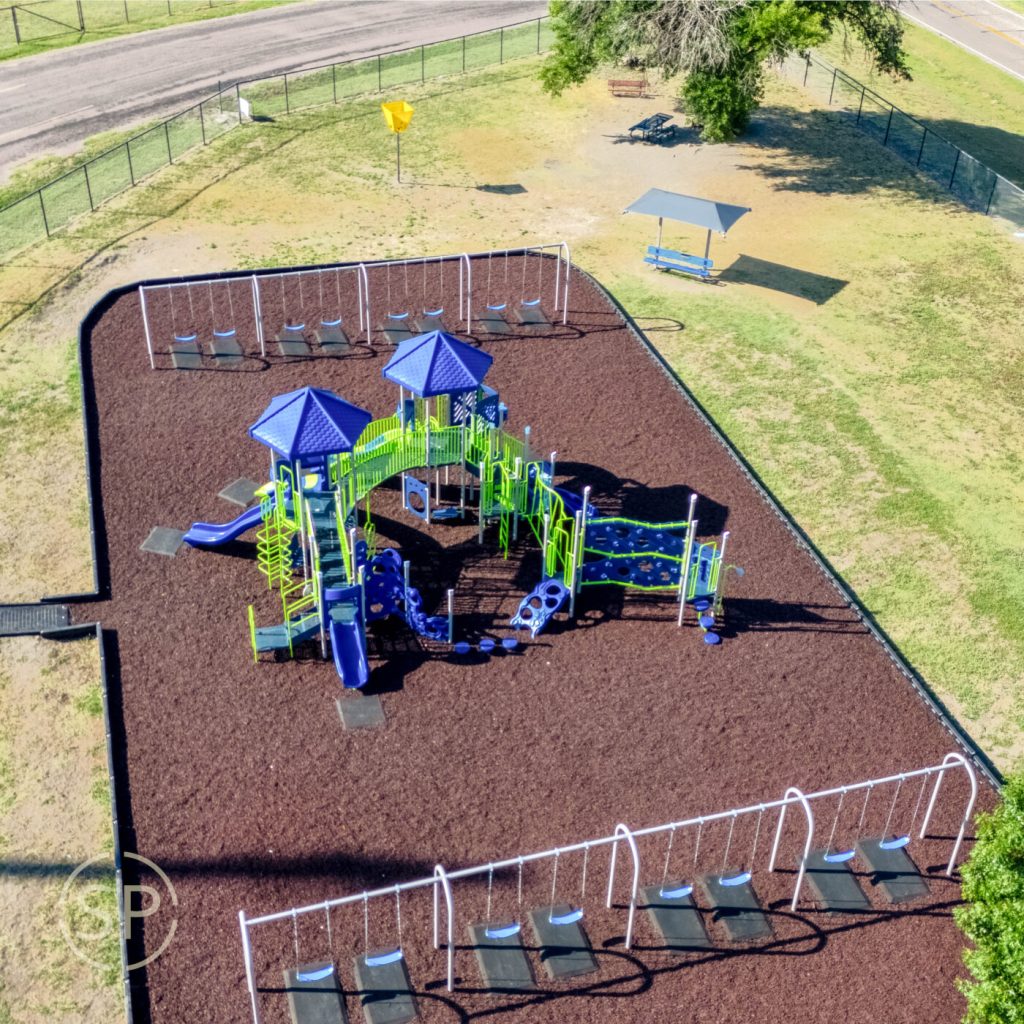
For communities seeking a natural aesthetic with cost-effective upfront installation, engineered wood fiber remains a popular choice for playground surfacing in Texas. Unlike standard landscaping mulch, which is unsafe, full of sharp splinters, and not compliant for public play areas, engineered wood fiber is made from mechanically shredded hardwoods that undergo rigorous testing to ensure they knit together securely. When properly installed and compacted, these fibers form a highly impact-resistant, spongy layer offering exceptional shock absorption while maintaining enough firmness for basic wheelchair navigation. However, maintaining the necessary safety ratings and accessibility standards with this organic material requires a highly dedicated, ongoing maintenance schedule from groundskeeping crews. The loose fibers naturally decompose over time and become displaced under swings and at the base of slides, meaning the surface must be regularly raked level and periodically topped off with fresh material to compensate for lost volume and maintain the legally required depth. As an alternative loose-fill option, synthetic rubber mulch provides a much higher level of durability and requires significantly less daily maintenance from park staff. Manufactured from recycled, completely wire-free tires, this heavy shredded rubber provides outstanding impact attenuation and retains its vibrant, non-toxic color for many years. Most importantly for the southern climate, synthetic rubber mulch absolutely will not decompose, compress into a hard sheet, or attract unwanted pests under the brutal heat and humidity.
Poured Rubber Systems
For organizations desiring the absolute highest tier of safety, accessibility, and architectural design, poured-in-place rubber playgrounds represent the undisputed gold standard in the commercial recreation industry. This seamless, meticulously engineered dual-layer system consists of a thick, shock-absorbing base layer of recycled rubber topped with a highly durable, customizable wear layer of vibrant EPDM rubber granules mixed with a specialized polyurethane binder. The resulting surface is perfectly smooth, highly resilient, and entirely wheelchair-friendly, requiring virtually zero daily maintenance to retain its strict accessibility status and maximum fall safety ratings year after year. Planners can utilize this incredibly versatile material to embed highly intricate graphics, interactive ground-level games, and vibrant community logos directly into the flooring, transforming the ground itself into an active play component. While the initial financial investment for a poured system is higher than loose-fill alternatives, the long-term return on investment is extraordinary due to the virtual elimination of daily maintenance labor and the massive lifespan of the materials. Communities that invest in these premium surfaces often find that their playgrounds experience significantly higher daily utilization rates, as the smooth pathways welcome parents with strollers, grandparents with walking aids, and children of all physical abilities to explore the space together.
Managing Southern Storms
The seamless nature of advanced playground flooring is particularly crucial when dealing with the sudden, torrential downpours that frequently impact the southern landscape. Proper drainage is an invisible but absolutely essential component of any successful outdoor recreational build, as trapped water quickly compromises the safety and longevity of the surface. When installed over a professionally engineered, highly compacted sub-base featuring precisely calculated slopes and integrated drainage systems, a poured-in-place surface allows massive amounts of rainwater to pass straight through the porous rubber matrix and safely into the ground below. This advanced, rapid drainage capability completely prevents the destructive washouts, mold growth, and messy pooling that constantly plague poorly planned loose-fill materials. Integrating proper French drains and catch basins during the initial earthwork phases ensures that the expensive safety surfacing is never submerged in standing water, thereby protecting the chemical binders from premature breakdown. Ultimately, prioritizing advanced drainage engineering ensures that the playground remains completely dry, structurally sound, and ready for energetic children to safely use mere minutes after a heavy storm has rolled through the area.